
Jambon au piment d'Espelette
Basque country, Nouvelle-Aquitaine, France
A Basque dry ham rubbed with mild Espelette pepper, gently warm and russet.
Overview
Jambon au piment d'Espelette is a basque dry ham rubbed with mild espelette pepper, gently warm and russet. A mature Basque-style ham with a russet-red pepper coating and gentle fruity heat. The underlying ham should remain sweet, clean and evenly cured. The Codex treats the product as a complete curing or cooking system, not simply a famous name. Raw material, cut or particle size, casing, smoke, fermentation, heat treatment and maturation all contribute to the result. The current legal or quality status is Unprotected ham style using Piment d'Espelette AOP as an ingredient. The source tradition and the Curesmith home method are kept separate.
Where it's from
Climate. The Basque country of south-west France.
Altitude. Basque foothills
The cut
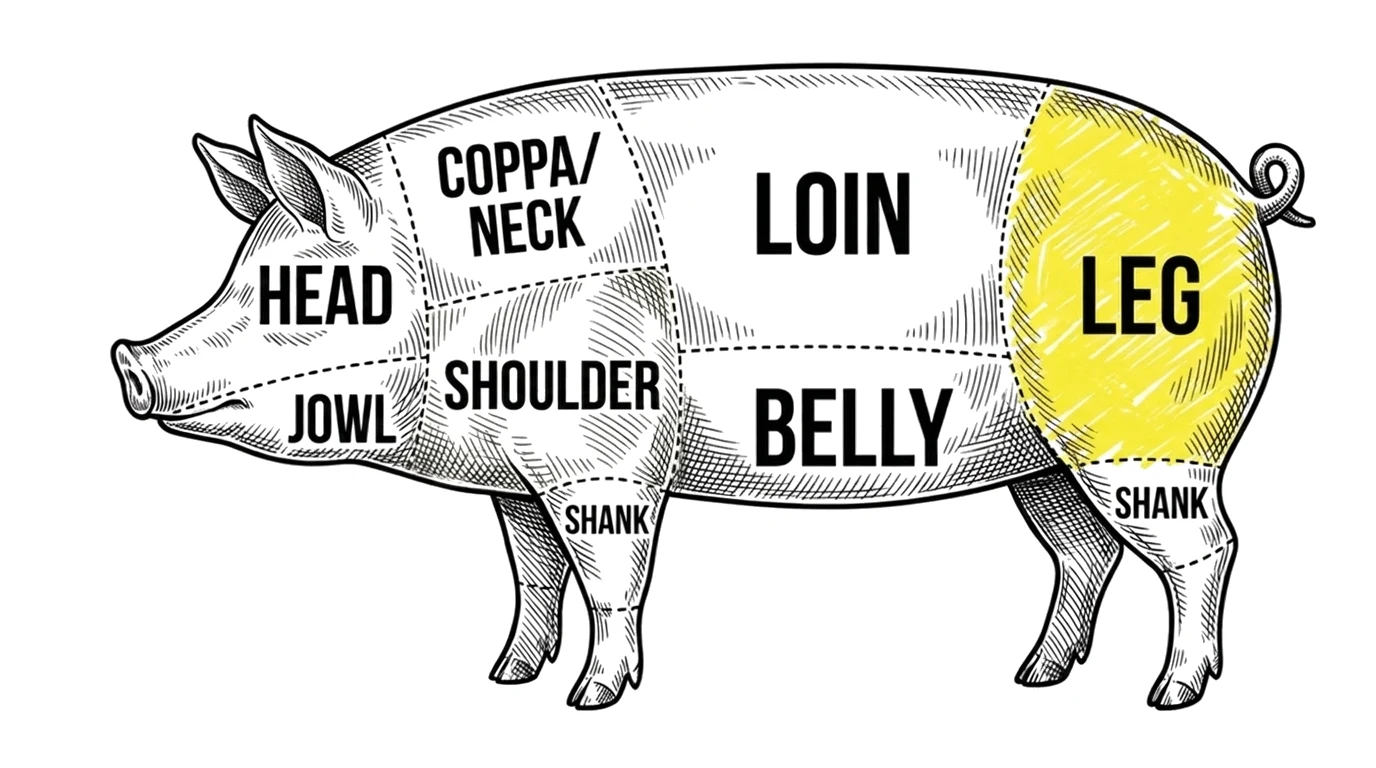
How to recognise it
A mature Basque-style ham with a russet-red pepper coating and gentle fruity heat. The underlying ham should remain sweet, clean and evenly cured. A hard outer ring, wet grey centre, rancid fat, sourness or air beneath casing indicates an uneven cure.
- Shape and size
- Whole leg, russet-dusted
- Lean colour
- Deep red
- Fat and marbling
- White
- Casing
- None
- Surface bloom
- Possible
Origins and history
A Basque dry-cured ham finished with piment d'Espelette, the mild, fruity red pepper of the village of Espelette that is itself protected. The pepper is rubbed over the ham, giving a gentle warmth and a russet colour, a variation on the Bayonne tradition of the same country. It reflects the Basque love of their signature chilli. Basque cooks use the fruity, moderately hot local pepper across meat, eggs and stews. Rubbing it over dry ham created a modern regional variation that adds colour and warmth without becoming a new protected designation. Legends and commercial origin stories are identified as such rather than used as proof of the current specification.
Name. Jambon, ham; piment d'Espelette, the Espelette pepper.
- Production today
- Basque producers.
- Protection
- Not separately EU-protected as a name; piment d'Espelette itself is AOP.
- Tradition vs modern
- An Espelette-rubbed variation on the Bayonne tradition.
- Seasonality
- Traditionally winter-salted.
Compare with. Jambon de Bayonne, Jambon du Kintoa
Serving and cultural significance
Sliced thin, gently warm with pepper. Keep the ham style unprotected. Piment d'Espelette is AOP, but using it does not confer protected status on the ham. it shows how place, material and process create identity. The reader can compare authenticity, legal status and practical home safety without confusing them. Slice thinly with bread, Basque sheep's cheese, peppers or cider; the fruity heat should support the ham.
Recipe and cure
This is not a finished recipe. It is a window into how this meat is traditionally cured. Before you follow any process, please run it through one of our curing calculators, so the salt, cure and timings are right and safe for your own batch.
Make this — the measured Curesmith version →The cure below is the traditional reference. “Make this” opens the measured Curesmith home recipe, scaled to your batch.
Traditional or protected production
Jambon au piment d'Espelette is not a separate EU geographical indication. Producers may use a qualifying ham, including Jambon de Bayonne PGI, and finish it with Piment d'Espelette AOP. The ham and pepper retain their own separate legal identities.
Sea salt (salt-box) with a piment d'Espelette rub; no fixed percentage.
- Meat
- pork
- Salt (%)
- traditional, no fixed %
- Curing salt
- Sea salt with an Espelette pepper rub
- Fermented
- No
- Starter or mould
- Cellar mould
- Smoked
- No
- Target aW or weight loss
- ~ weight loss
- Temperature (°C)
- cold salting, then 10 to 15
- Humidity (%)
- 70 to 80
- Maturation
- 7 to 12 months
- Basis
- percentage of green meat weight
- Style
- Traditional dry salting (salt-box)
Method
- Salt the leg by the traditional method and rest cold.
- Wash or brush off surface salt.
- Rub with the pepper where used and air-dry.
- Age to the target loss.
Notes
- A more efficient way of curing this product is using the EQ Method. No more than 2.5% salt to meat weight is required. To follow the EQ method, please use our whole-muscle EQ curing calculator to work out proper ratios and curing times.
In the Codex
What this product teaches, and where to read more.
Temple. Foundation, Time