
Jambon sec de Corse / Jambon sec de Corse – Prisuttu
pree-ZOO-too
Also known as Prisuttu, Jambon sec de Corse (Prisuttu), Jambon sec de Corse, Jambon sec de Corse – Prisuttu
Corsica (regional), Corsica, France
Deep, nutty and firm, a mountain ham shaped by island pigs and long time.
Overview
Prisuttu is the long-aged ham of the Corsican Nustrale pig. The leg is dry salted without added preservatives, slowly matured and presented without the foot. Its oily marbled slice and hazelnut-like finish reflect both the pig's dark, foraging meat and the island's chestnut and acorn landscape.
Where it's from
Climate. The Corsican mountains, cool and clean.
Altitude. Corsican mountains
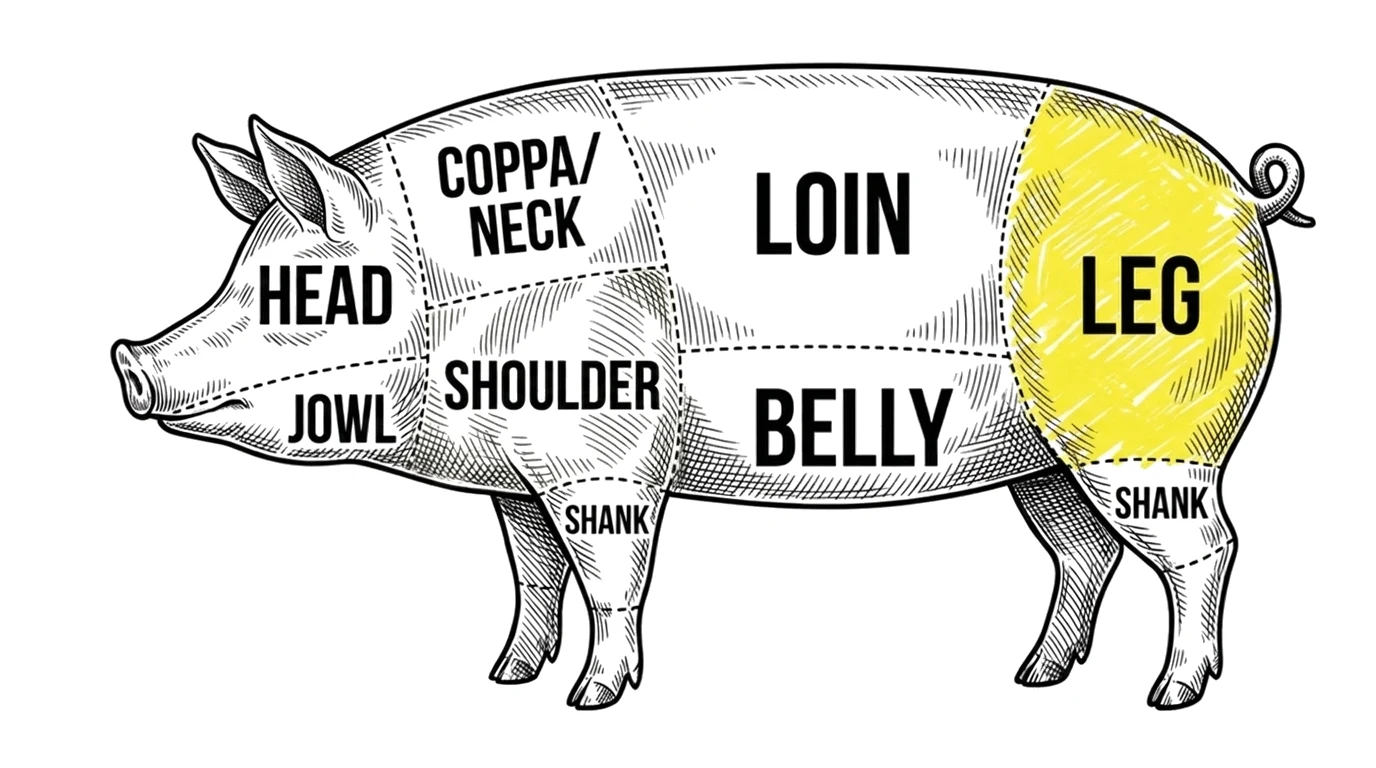
The cut
How to recognise it
The protected ham has a long, slender profile and is presented without the foot. The cut surface is strong red, visibly marbled and often glossy because the fat softens readily. Aroma should be mature, sweet and slightly nutty, with no smoke. A sticky bone pocket, rancidity, excessive salt, sourness or a dry brown outer ring is defective.
- Shape and size
- Whole leg, deeply coloured
- Lean colour
- Deep red
- Fat and marbling
- Rich, chestnut-fed marbling
- Casing
- None (bone-in leg, sold bare)
- Surface bloom
- Natural mould
Origins and history
In Corsican villages the winter pig slaughter was a household calendar, not merely a butchery task. The largest leg was salted for the longest cure and reserved for later in the year, while smaller pieces and sausages were eaten sooner. The word prisuttu is the Corsican form of prosciutto and belongs to the island's Italian linguistic inheritance. Nustrale pigs traditionally roamed woodland and mountain pasture, converting chestnuts, acorns and scrub into unusually aromatic fat. Rural depopulation and imported pork weakened the system in the twentieth century. The modern protected chain was built to conserve the breed, extensive husbandry and island curing knowledge. The ham received AOC and then PDO protection in 2014.
Name. Prisuttu is the Corsican form of prosciutto.
- Production today
- Corsican AOP producers.
- Protection
- AOP; from Corsican pigs, part of the island trio.
- Tradition vs modern
- Long ageing and free-range island pigs are the traditional essentials.
- Seasonality
- Tied to the winter slaughter.
Compare with. Jamón Ibérico de Bellota, Coppa de Corse / Coppa de Corse – Coppa di Corsica
Serving and cultural significance
Carve into small, thin slices that include some soft fat. Serve with chestnut bread, brocciu or other mild cheese, figs, melon or olives. Prisuttu is also part of the Corsican charcuterie plate, where it should be tasted before heavily smoked or strongly spiced meats.
Recipe and cure
This is not a finished recipe. It is a window into how this meat is traditionally cured. Before you follow any process, please run it through one of our curing calculators, so the salt, cure and timings are right and safe for your own batch.
Curesmith home adaptation — not designation-compliant
Make this — the measured Curesmith version →The cure below is the traditional reference. “Make this” opens the measured Curesmith home recipe, scaled to your batch.
Traditional or protected production
PDO Prisuttu is made from the fresh leg of a qualifying Corsican-breed pig raised and finished within the protected system. It is salted with dry sea salt without additives or preservatives and matured slowly for at least the protected minimum period, commonly twelve months or longer. The whole production and ageing relationship with Corsica is essential.
Sea salt, salt-box method, with black pepper. No fixed salt percentage.
- Meat
- Corsican Nustrale pigs
- Cut
- whole hind leg, bone in
- Salt (%)
- traditional, no fixed %
- Curing salt
- Sea salt only
- Other agents
- salt, pepper
- Fermented
- No
- Starter or mould
- Natural cellar mould
- Smoked
- No
- Target aW or weight loss
- ~ weight loss
- Temperature (°C)
- cold salting, then cellar
- Humidity (%)
- 70 to 80
- Maturation
- over a year
- Basis
- percentage of green meat weight
- Style
- Traditional dry salting (salt-box)
Method
- Salt the leg cold in sea salt.
- Rest so the salt draws through.
- Age long in the mountain cellar to the target loss.
Notes
- The official protected specification controls the named product. Any Curesmith EQ, starter-culture, curing-salt or home-scale adaptation is a separate method and must not be presented as designation-compliant.
- A more efficient way of curing this product is using the EQ Method. No more than 2.5% salt to meat weight is required. To follow the EQ method, please use our whole-muscle EQ curing calculator to work out proper ratios and curing times.
Safety. Long island ham on chestnut-fed pigs. Verify before serving.
In the Codex
What this product teaches, and where to read more.
Temple. Pillar, Meat Quality