
Jamón de Teruel / Paleta de Teruel
Also known as Jamón de Teruel, Paleta de Teruel
Teruel, Aragon, Spain
Clean, savoury and lightly sweet, a refined white-pig ham with a firm, even lean.
Overview
Jamón de Teruel is a protected white-pig ham cured on Aragón's high, cold plateau. Its eight-pointed star brand, retained hoof and mild savoury profile distinguish it from both generic Serrano ham and the darker marbled Ibérico hams.
Where it's from
Climate. The cold, dry high plateau of Teruel in Aragon.
Altitude. High cold plateau, around 800 to 1000 m
The cut
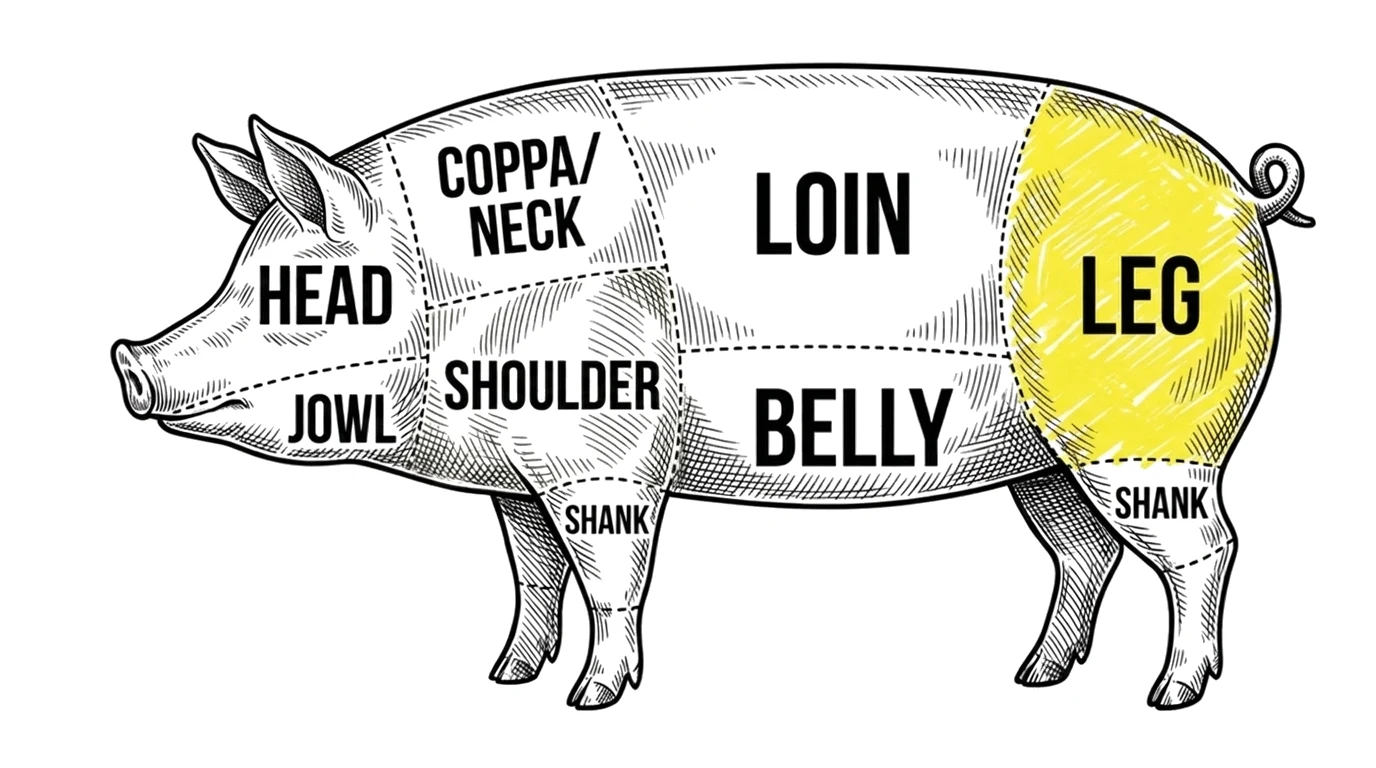
How to recognise it
The ham is long with rounded edges and normally retains the hoof. The slice is pink-red with moderate fat infiltration, and the fat is shiny, white-yellow and aromatic. The eight-point star and TERUEL brand identify certified pieces. It should be mild and clean rather than deeply nutty like Ibérico.
- Shape and size
- White-pig leg, star brand
- Lean colour
- Rosy to deep red
- Fat and marbling
- White
- Casing
- None
- Surface bloom
- Possible
Origins and history
Teruel's altitude, dry air and severe winter cold gave the province a natural advantage for preserving pork. Farm households salted legs after the winter slaughter and hung them where mountain air could dry them gradually without heavy smoke. The ham remained an important rural product as the province developed commercial pig farming based on white breeds. In 1984 Jamón de Teruel became the first Spanish ham to receive a denomination of origin, creating a model for later regional protection. The PDO now covers both ham and shoulder, regulates breed crosses, carcass characteristics and production within Teruel, and uses an eight-pointed star and the word TERUEL as identifying marks. Its importance is regional as well as gastronomic, retaining value in a sparsely populated province.
Name. Jamon, ham; Teruel names the province; branded with the star of Teruel.
- Production today
- White-pig ham producers in Teruel.
- Protection
- DOP (1984, Spain's first ham DOP); white pigs, salt only.
- Tradition vs modern
- High-plateau ageing; the star brand marks approved hams.
- Seasonality
- Year-round.
Compare with. Jamón Serrano, Jamón de Trevélez
Serving and cultural significance
Slice thinly and serve with bread, tomato, Aragón olive oil, local cheese or young red wine. It also works in croquetas, eggs and vegetable dishes. Add it late to hot food so that the lean remains tender.
Recipe and cure
This is not a finished recipe. It is a window into how this meat is traditionally cured. Before you follow any process, please run it through one of our curing calculators, so the salt, cure and timings are right and safe for your own batch.
Curesmith home adaptation — not designation-compliant
Make this — the measured Curesmith version →The cure below is the traditional reference. “Make this” opens the measured Curesmith home recipe, scaled to your batch.
Traditional or protected production
Jamón de Teruel is a protected white-pig ham. The current specification uses maternal Landrace, Large White or their cross and a Duroc sire. Breeding, slaughter, processing and maturation occur within the protected area. Certified hams carry TERUEL and the eight-point star.
Sea salt only, salt-box method; no fixed percentage.
- Meat
- white pig
- Cut
- whole hind leg, bone in
- Salt (%)
- traditional, no fixed %
- Curing salt
- Sea salt only (white-pig ham)
- Fermented
- No
- Starter or mould
- Natural cellar mould possible
- Smoked
- No
- Target aW or weight loss
- ~ weight loss
- Temperature (°C)
- cold salting, then rising through the cellar
- Humidity (%)
- 60 to 80
- Maturation
- 12 to 24 months
- Basis
- percentage of green meat weight
- Style
- Traditional dry salting (salt-box)
Method
- Salt the leg cold in sea salt, roughly a day per kilo, then brush off.
- Rest cold so the salt equalises through the leg.
- Move to the cellar and age, letting the temperature rise through the warmer months.
- Age to the target loss, judging by feel and weight.
Notes
- The official protected specification controls the named product. Any Curesmith EQ, starter-culture, curing-salt or home-scale adaptation is a separate method and must not be presented as designation-compliant.
- A more efficient way of curing this product is using the EQ Method. No more than 2.5% salt to meat weight is required. To follow the EQ method, please use our whole-muscle EQ curing calculator to work out proper ratios and curing times.
In the Codex
What this product teaches, and where to read more.
Temple. Foundation, Time