
Beef Brisket
Also known as brisket, point, flat, deckle, Brust, poitrine de boeuf, punta di petto, falda
The breast, from an animal with no collarbone, so it carries the front of the body and is dense with connective tissue. The cut behind corned beef, salt beef and pastrami, and it wants brine and long moist heat.
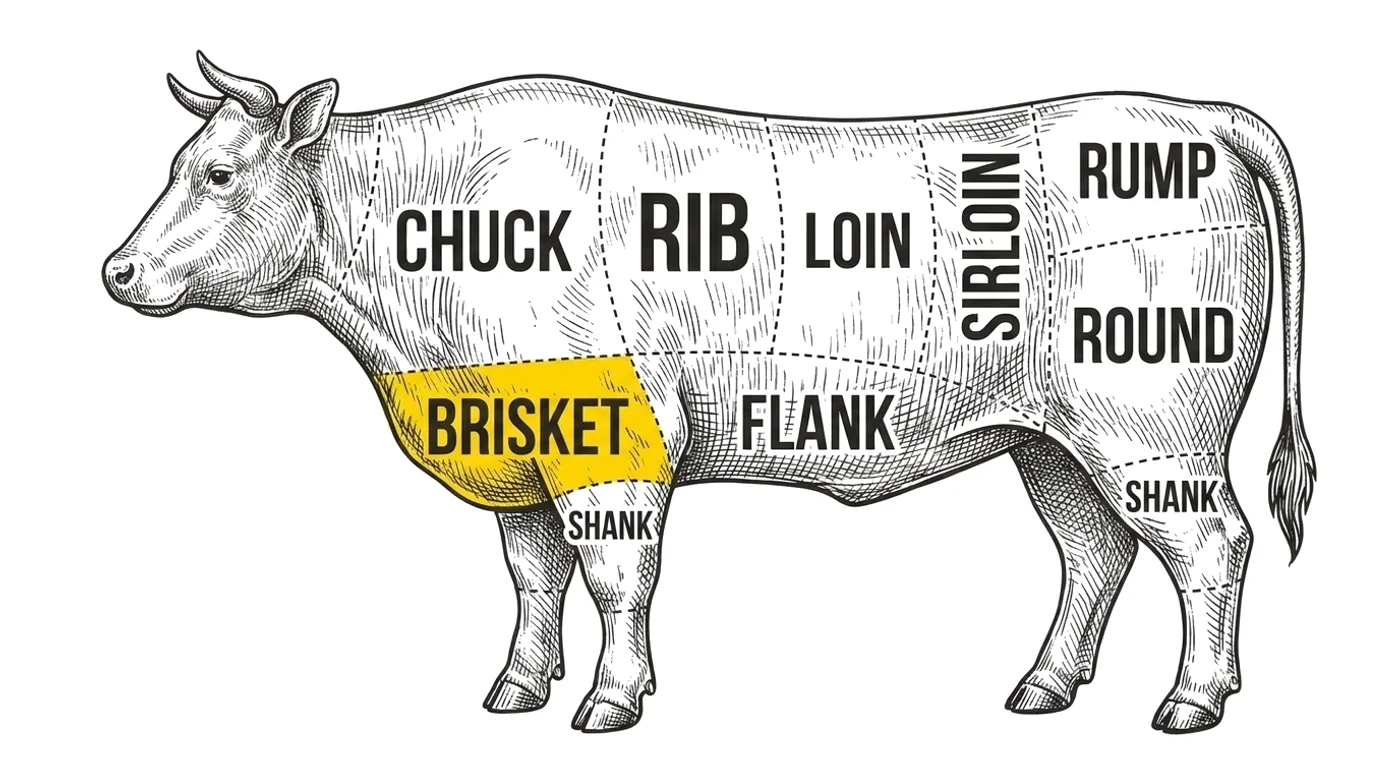
Cattle have no collarbone, so the whole weight of the front of the animal is slung between the shoulder blades and carried by the muscles of the chest. The brisket is those muscles. They work constantly under load, and the result is dense, coarse-grained meat laced with heavy sheets of connective tissue, with a thick fat cap on the outside and a seam of fat running through the middle.
That structure explains everything about how brisket is used. It is too tough for anything fast, and long moist heat converts its collagen to gelatin and turns it succulent. In charcuterie its natural home is the wet cure: corned beef, salt beef, and pastrami are all brisket brined for a week or more and then boiled, steamed or smoked and steamed. The brine reaches through a cut this thick more reliably than a surface rub would, and the long cook does the rest.
The cut has two distinct parts, which most recipes ignore and which matter. The flat, or first cut, is the leaner rectangular muscle and is what is usually sold as brisket for corning; it slices neatly and can dry out. The point, or deckle, sits on top, is fattier, more marbled and more forgiving, and it is the part barbecue traditions prize. A whole packer brisket is both together with the fat seam between them. Where a recipe expects one and receives the other, the timing changes.
Brisket also appears in sausage, particularly in the all-beef traditions, where its combination of well-flavoured lean and hard beef fat is useful in a cooked product. It is less suited to dry-cured work, where the heavy connective sheets do not soften and the beef fat is a rancidity risk over a long dry.
The fat cap is a decision. Left on, it protects the meat during a long cook and bastes it; trimmed, the cure penetrates faster and more evenly from that face. Most corned-beef practice trims it back rather than removing it, leaving perhaps a few millimetres.
Pastrami is the useful illustration of the whole logic: brine to cure and season the interior, a spice crust for the surface, smoke for flavour, then steam for hours to do what the smoke cannot, which is turn the collagen soft.
Temple element. Pillar, Meat Quality