
Pork Loin
Also known as loin, lonza, lomo, back, Kotelettstrang, longe, schab
The long lean muscle down the back, barely worked and therefore pale, tender and almost fat-free. That leanness is why it cures fast and dries out faster, and why it is unforgiving.
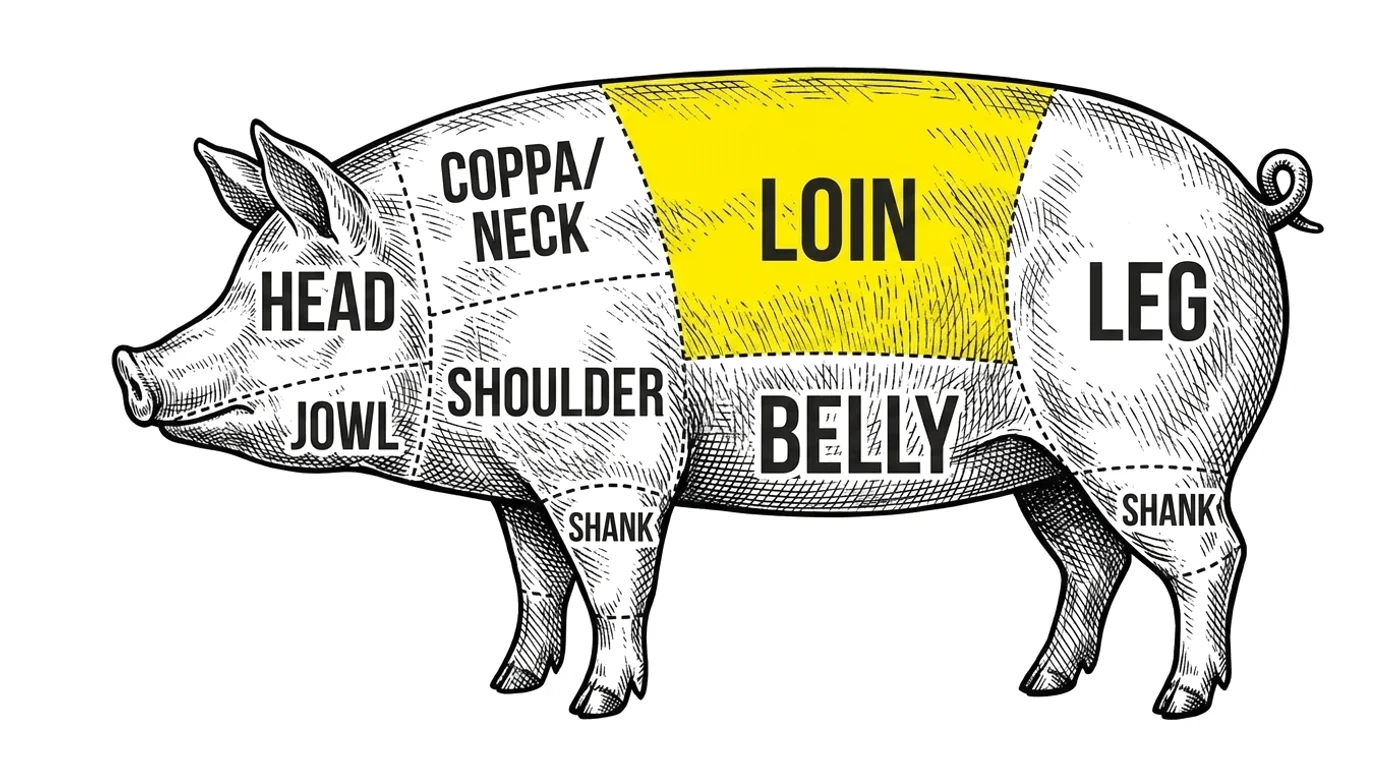
The loin is the longissimus dorsi and its neighbours, running along the spine from the shoulder to the hip. It supports posture rather than producing movement, so it does very little work, and everything about it follows from that: it is pale because it carries little myoglobin, tender because it has little connective tissue, and lean because it stores almost no intramuscular fat.
For curing this is a mixed inheritance. The loin is a clean, uniform, boneless cylinder with no seams to trap salt unevenly, so it cures predictably and quickly, and it slices beautifully. Lonza, lomo embuchado, Canadian bacon, kassler and the back-bacon family are all this muscle. But leanness means there is almost no fat to buffer the drying, and the same absence of connective tissue that makes it tender means there is little to hold structure as water leaves. A loin dries fast, and pushed too far it goes from firm and translucent to dry, chalky and tough with very little warning. Where a ham forgives an extra fortnight, a loin does not.
The fat cap is therefore worth arguing about. A loin with its back fat left on dries more slowly and evenly from one face, keeps better, and the fat carries flavour into the lean over a long cure; the traditional lomo and lonza are usually cured with some fat on. A skinned and trimmed loin looks leaner and dries harder. Where a recipe strips the loin bare and then complains of dryness, the fat cap was the answer.
It is also the muscle most often used to demonstrate curing to a beginner, because it is small, cheap relative to a leg, cures in weeks rather than months, and shows the result clearly. That is a genuinely good reason to start there, provided the weight-loss target is respected rather than the calendar.
In sausage making the loin is usually the wrong choice and is used mainly when it is what is available. It is too lean to carry a mix on its own, it contributes little flavour, and it is expensive for the job. Where a formula lists loin among the meats it is normally alongside shoulder and fat, using the loin for pale lean rather than as the base.
The tenderloin, the small muscle tucked under the spine, is a different thing again: even leaner, even more tender, and too small and too delicate for most curing work.
Temple element. Pillar, Meat Quality