
Pork Trotter
Also known as pig's foot, pettitoes, Schweinshaxe, pied de porc, zampino, manitas de cerdo, nóżki
Almost no meat and almost all collagen, which is precisely the point. The trotter is a gelatin factory and, split and boned, the natural casing that makes zampone what it is.
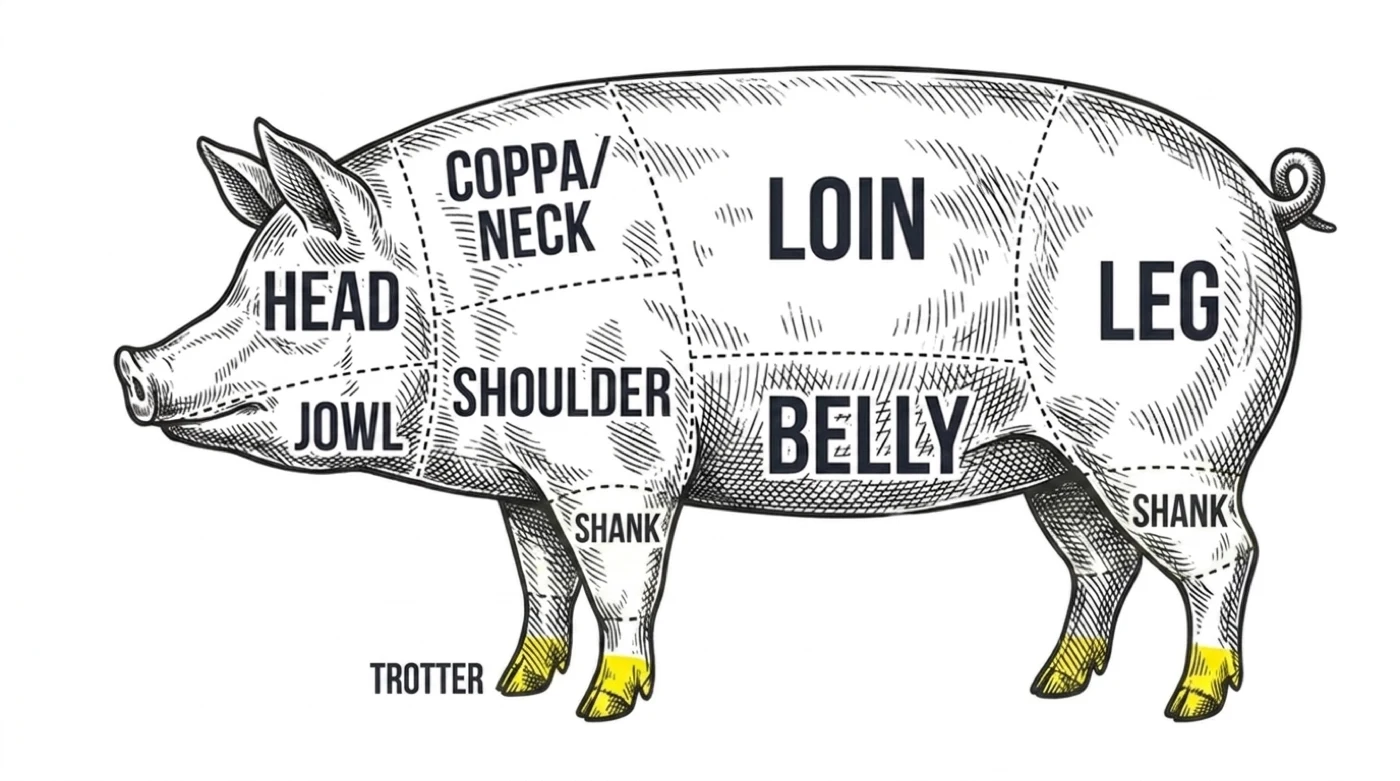
A trotter is skin, tendon, cartilage and bone with a few scraps of muscle between them. As a piece of meat it is close to worthless, and as a source of gelatin it is the best thing on the animal. That inversion is the whole of its use in charcuterie.
The traditional job is setting things. A trotter or two added to a pot of brawn, a jellied ham, a stock for a terrine or a braise will give a liquor that sets firm on cooling without any added gelatin. The collagen in the skin and tendon converts under long moist heat and there is a great deal of it relative to everything else. Where a recipe for a jellied product calls for a trotter and the cook leaves it out, the product does not set, and the usual response is to add powdered gelatin and wonder why the texture is rubbery rather than yielding. They are not the same thing: the gelatin from a trotter comes with the fat, flavour and dissolved protein of the stock around it.
The second job is structural. Zampone di Modena is a boned trotter stuffed with a seasoned pork farce and cooked, and the skin of the foot is the casing. That takes real butchery: the foot is boned out from the top while keeping the skin intact as a bag, which is a skill and a slow one. Cotechino is the same farce in an ordinary casing, which is why the two are always mentioned together and why zampone costs more.
Trotters are also eaten in their own right across Europe and Asia, brined and boiled, crumbed and grilled, braised, or set in their own jelly, and the pleasure of them is entirely textural.
Preparation is cleaning. The foot is the part of the animal that has been standing in whatever the animal stood in, and it needs scrubbing, the dewclaws attending to, and singeing or scalding for bristle. Split lengthwise, trotters give up their gelatin faster. The hooves themselves are removed at the abattoir or scalded off.
One practical note for anyone using trotters to set a product: how firmly a stock sets depends on how much collagen went in and how much water it is dissolved in, and both vary. The reliable approach is to chill a spoonful of the finished liquor and see whether it sets before committing the batch, rather than trusting a ratio.